Friday, July 22, 2011

Thunbergia erecta

Thunbergia erecta is a summer-flowering shrub with bright purple-blue flowers. The 2-inch wide, tubular blooms have a yellow throat and hang below the stem of the plant. Sporadic flowering may occur at other times of the year.
This species is native to tropical Africa and is recommended for USDA Zones 10B-11. Mine has been happily growing in Zone 9B without protection for more than 20 years. It has also never been watered or fertilized in that time, so although the plant looks delicate, it seems to be very durable.
Thunbergia erecta grows best in full to part sun and reaches a height and spread of 4-6 feet.
It is also sometimes known as Bush Clock Vine or King's Mantle.

Friday, July 15, 2011

Bloom Day - July 2011

A few summer rains have finally arrived, and the plants that were clinging to life have burst into bloom. Here's a sampling of what's looking good today. Click on the highlighted names for more photos and a complete plant profile.


Neoregelia Sheba, Neo. Lila
Neo. Debbie, Neo. Franca
Aechmea fasciata, Neomea Popcorn


Neomarica gracilis, N. longifolia
Periwinkle, Turnera
Pink & White Plumerias
Cosmos, Thevetia


Costus barbatus, C. scaber
Zingiber zerumbet, Clerodendrum ugandense
C. speciosissimum, C. paniculatum
Red Pagoda Hibiscus, Malvaviscus


Shrimp plant, Gold Shrimp
Ixora, Crossandra
Jasminum nitidum, J. sambac
Aloe zebrina, Sabal palmetto


Tabernaemontana single & double
Ruellia elegans, Pentas
Duranta, Cestrum aurantiacum
Brugmansia, Lantana


Plumbago, Spiderwort
Porterweed, Bauhinia galpinii
Russelia, Jatropha
Justicia, Beautyberry
Wedelia, Bush Daisy


To see what's blooming in gardens all over the world today, visit May Dreams Gardens, host of Garden Bloggers Bloom Day.

Monday, July 11, 2011

Aechmea fasciata

Aechmea fasciata is often one of the first bromeliads that people own, because it is very durable and easy to grow. The leaves are covered with silvery trichomes, or "scurf" that helps the plant absorb humidity from the air.
Enlargement of the trichomes.


The underside of the leaves often show pronounced banding.
The pink inflorescence usually appears in late spring and keeps good color for several months. Purple flowers emerge during the first month.
Plants grow about 1 1/2 feet tall and wide. They do well in dappled shade or part sun.
The foliage will survive a freeze, but will be damaged if frost settles on the leaves. Planting under the protective canopy of a leafy tree is ideal.


Buy this plant!

Saturday, July 9, 2011

Sabal palmetto

One of the most attractive, durable, and wildlife-friendly palms to have in your landscape is the Sabal palmetto. The early summer bloom spikes are 5-6 feet long, and pleasantly fragrant.
Thousands of creamy white flowers open on each spike, and attract an equal number of flying insects foraging for pollen and nectar. Here's a 20 second video showing the multitude of insects visiting these blooms. You can really only see the largest of the flying insects, but there are about 10 times as many bugs present as what are visible in the video.
 By late fall, the small black fruits are ripe, and provide a feast for squirrels, raccoons, bear, deer, and many different species of birds.

Known as the sabal palm or cabbage palm, it is the state tree of Florida and South Carolina. It is tolerant of both drought and flood, and survives brush fires with only superficial damage.

This plant is native to the southeastern U.S., Cuba, and the Bahamas. It is recommended for USDA Zones 8-10.

Sabal palmetto typically reaches a height of about 50 feet, with a trunk diameter of up to two feet. Leaves are up to 12 feet long, with drooping tips.
The palm fronds are usually self-cleaning. The petioles snap off when brown and brittle, leaving a distinctive "boot" attached to the trunk.

There is some genetic variability in how long the boots will remain. Some plants keep them for the life of the palm, while others quickly fall off, leaving a "slick" trunk. Debris collects in the boots of older palms, often providing a home for ferns, tillandsias, and other small plants.
The large leaves were traditionally used by the Seminole Indians to thatch roofs.

Thursday, July 7, 2011

Neomea 'Popcorn'

Neomea 'Popcorn' is an intergeneric hybrid created by crossing a Neoregelia with an Aechmea. The tight cluster of flower buds in the center of the plant starts out small and then continues to grow and expand (like popcorn) as more buds are formed. Flowers are white and open a few at a time during the early summer. Spent petals turn pink before shriveling away. The entire inflorescence lasts for two months or more.
The plant can grow to be over 3 feet across. The attractive foliage is olive-green on the top and reddish on the underside.
Mine grow in full or dappled shade. They tolerate temperatures in the upper 20°F range under the protective canopy of a large tree.

Friday, July 1, 2011

Friday Creature Feature - Glass Lizard

It's not a snake! It's a legless lizard. They differ from snakes in the following ways: they have moveable eyelids, external ear openings, and inflexible jaws. Adults can grow to more than three feet in length.

Glass lizards get their name from the ability to break off all or part of their tail when seized by a predator. The tail makes up more than half of their total length, so the predator is easily distracted by the squirming tail while the lizard escapes. The tail regrows over a period of months or years.
Eastern glass lizards (Ophisaurus ventralis) are found throughout the southeastern U.S. in a variety of habitats. Florida is home to four different species of glass lizards.

They spend most of their lives burrowing through soil and piles of leaves in search of food. They eat a wide variety of insects, spiders, and other invertebrates, as well as small reptiles.

In early summer, the female lays several eggs in a protected spot, which she then guards until the eggs hatch later in the summer.


Thursday, June 30, 2011

Mother Nature's Artistry

I'm not sure if this is "artistry" or "accident". In any case, I thought it was interesting. A single leaf of Costus barbatus failed to completely unfurl. This caused the tip of the next leaf to get caught in the curl, preventing it from opening fully. The process became self-perpetuating, with each leaf holding on to the tip of the next. Now this spiral ginger is a spiral staircase!

Mother Nature's Artistry is featured here on the last day of every month. Check back again next month to see what Mother Nature has been up to!

Wednesday, June 15, 2011

Bloom Day - June 2011

In spite of our severe drought, lots of plants are trying to bloom. Here's a sampling of what's picture-worthy this month. Click on the links for more photos and information about each plant.


Nidularium leprosa, Billbergia 'Windii'
Portea petropolitana, Quesnelia arvensis
Aechmea fasciata, Neomea 'Popcorn'


Russelia, Plumbago
Bush Daisy, Bauhinia
Spiderwort, Tabernaemontana
Cestrum, Duranta


Hamelia, Costus barbatus
Elderberry, Coral Porterweed
Crinum, Cereus
Quisqualis, Maypop


Jatropha, Shrimp plant
Thevetia, Blue porterweed
Cosmos, Turnera
Knock-out Rose, Brugmansia


Pentas, Justicia
Brunfelsia, Tecoma
Sambac Jasmine, Ruellia elegans
Allamanda, Gold Shrimp


When you're done browsing in my garden, visit May Dreams Gardens for blooms from around the world.

Friday, June 10, 2011

Billbergia 'Hallelujah'

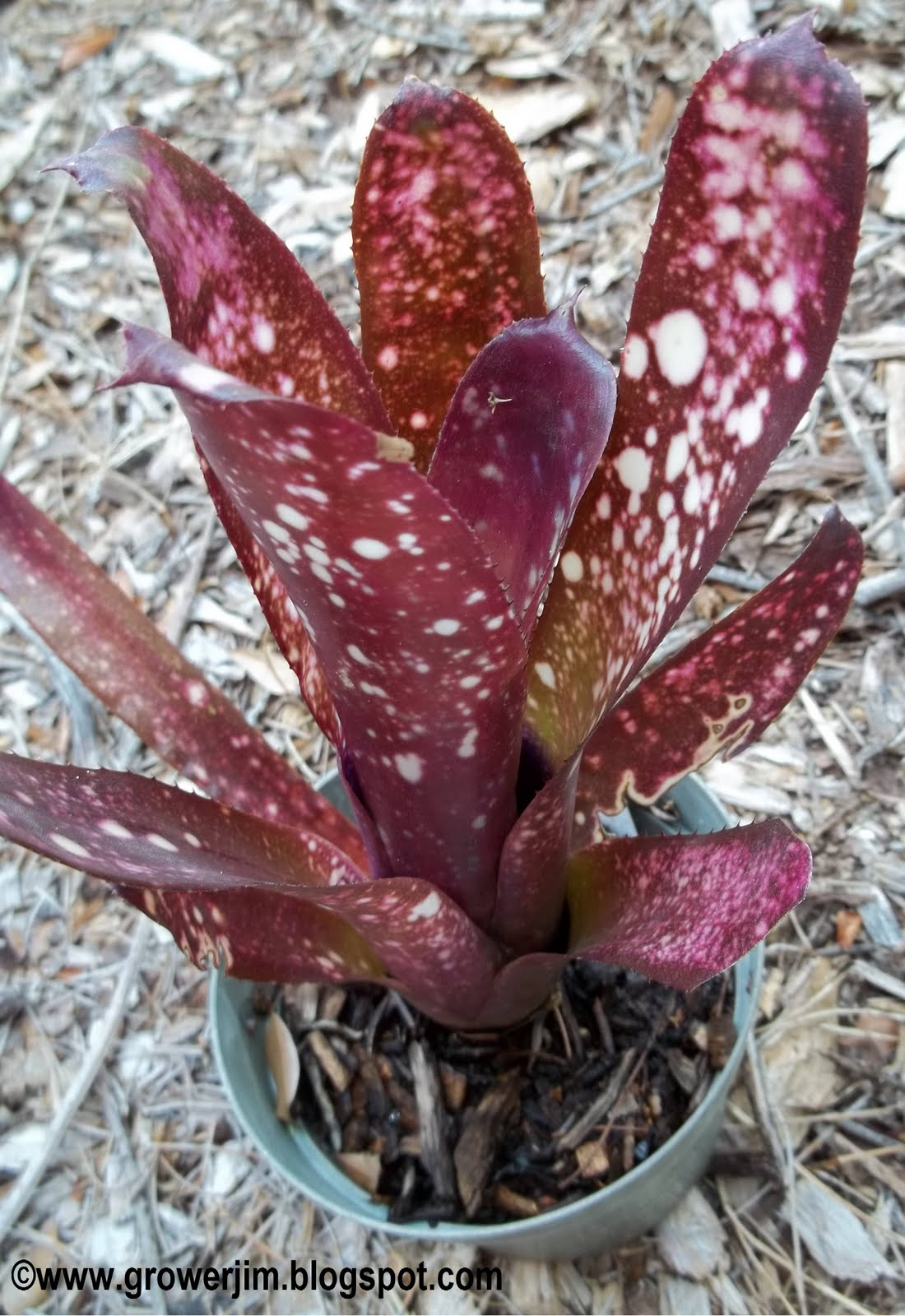
Billbergia 'Hallelujah' is grown more for its colorful foliage than for the flowers. Although the red, white, and blue blooms are showy enough, it's the stunning blends of red, pink, purple, and white on the leaves that gets everyone's attention.The plant grows to about a foot in height, and develops its best color when it gets direct sun at least part of the day. In tropical climates, a little shade during the middle of the day is preferred.Flowering can happen at almost any time during the year, and like most Billbergias, the inflorescence fades within about three weeks.
Wednesday, June 8, 2011

Elderberry (Sambucus canadensis)

Elderberry, or Sambucus canadensis, is a prolific fruiting shrub or small tree. Flowers and fruit appear simultaneously throughout the spring and summer. The white flower clusters are 8-10 inches across and can be made into elderflower fritters. Just pick entire flower clusters, dip in batter, and fry. Dried flowers can also be made into a tea.
The blooms are quickly followed by the fruit, which turns a dark purple-black color when ripe. The fruit can be eaten dried, or cooked into jams, jellies, pies, or wine. Eating large quantities of fresh fruit is not advised due to small amounts of poisonous alkaloids. Cooking destroys these alkaloids. The fruit is not only good, it is good for you. Elderberries contain more vitamin C per unit weight than oranges.
The ripe fruit attracts more than 50 different kinds of birds, so count on sharing a portion of your crop with them. The birds spread seeds wherever they go, and this plant can be found growing wild in most rural parts of its range.
Elderberries also spread by root suckers, and can become quite aggressive if allowed to roam freely. They perform well in mixed shrubby borders, or along fence-rows, where suckers will not be a problem. Plants grow 12-15 feet tall with multiple trunks or stems. Twigs have a distinctive warty appearance, and older trunks have deeply furrowed bark.


Elderberry is native to the eastern half of North America, ranging from USDA Zones 3-11. In most of its range, the pinnately compound leaves are deciduous, but in Zones 9-11, the plant is evergreen. It grows in full to part sun, and prefers moist soil, but is also very drought-tolerant. Propagation is by seeds, stem cuttings or sections of the root.